
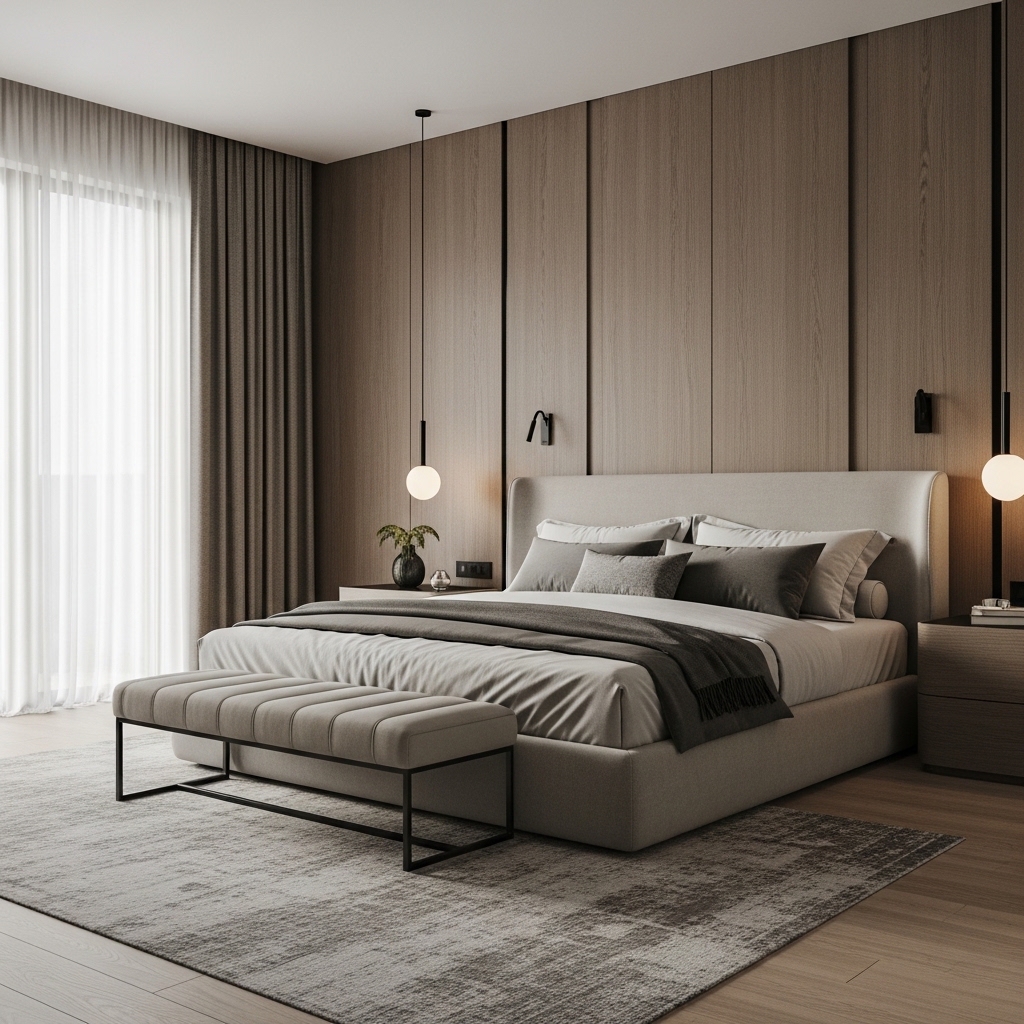
The concept of a luxury master bedroom has undergone a profound transformation. Gone are the days of simply oversized furniture and opulent fabrics. Today, for the discerning homeowner—particularly the rising generation of ultra-high-net-worth individuals—the primary suite is no longer just a place to sleep. It has evolved into a personal ecosystem: a private sanctuary dedicated to holistic wellness, authentic self-expression, and seamless integration with technology and nature .
According to recent market analysis, the demand for premium interiors is being driven by a new wave of buyers—millennials and Gen Z—who now account for 45% of the global luxury market. These clients are not passive consumers; they are active participants in the design process, prioritizing experiences, health, and authenticity over flashy, conspicuous consumption .
Whether you are an architect, a designer, or a homeowner planning a personal retreat, these are the definitive trends defining the luxury master bedroom in 2026.
1. The Shift from Opulence to “Quiet Luxury”
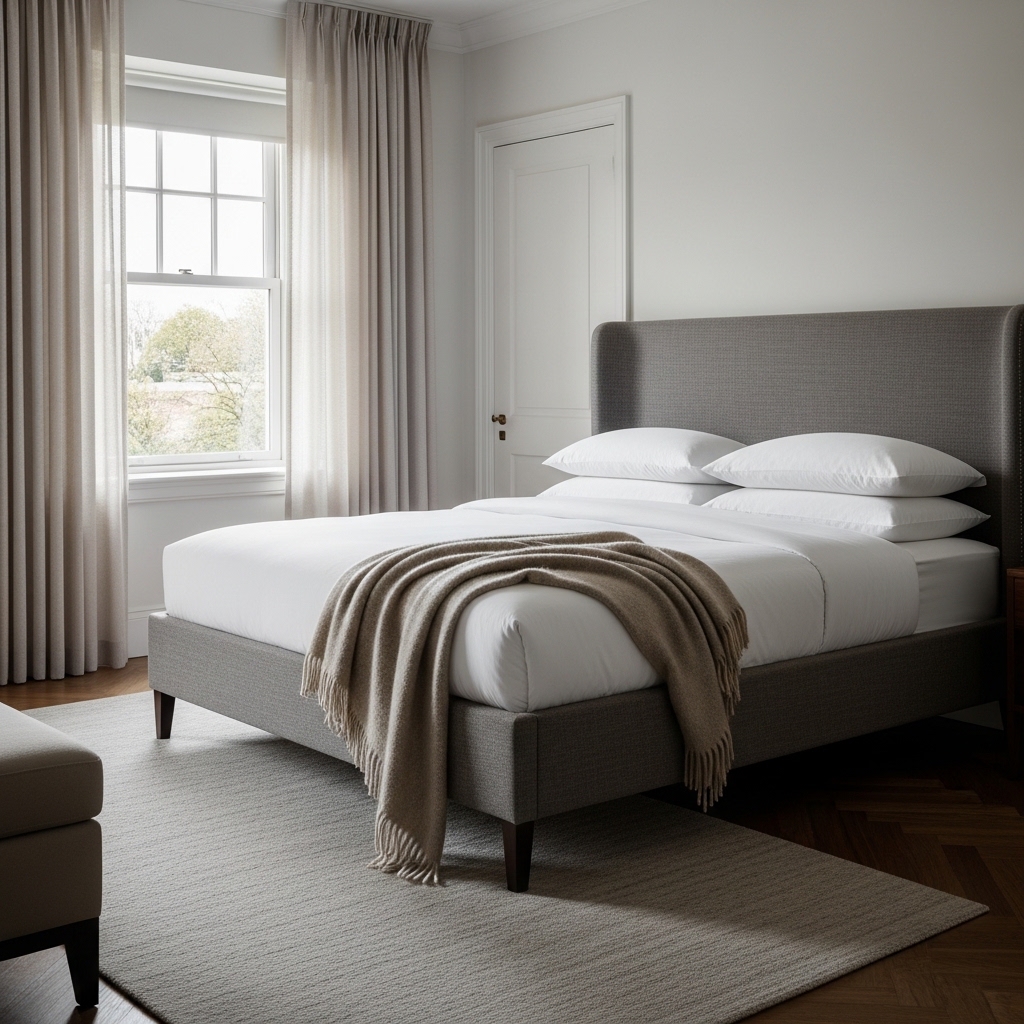
The loudest statement in 2026 luxury design is restraint. The trend of “Quiet Luxury” (also known as “stealth wealth”) continues to dominate. This aesthetic rejects logos and obvious displays of wealth in favor of impeccable quality, timeless design, and a “if-you-know-you-know” sensibility .
In practice, this means selecting materials for their provenance and feel rather than their flashiness. Think cashmere throws, hand-finished walnut bed frames, and silk drapery that feels soft to the touch. It is a style that whispers refinement through craftsmanship rather than shouting for attention with bold logos or trendy patterns . As noted by experts, younger luxury buyers are far more interested in a “rare or collectable piece with provenance” than a “flashy watch” .
2. Wellness as the Core Architecture
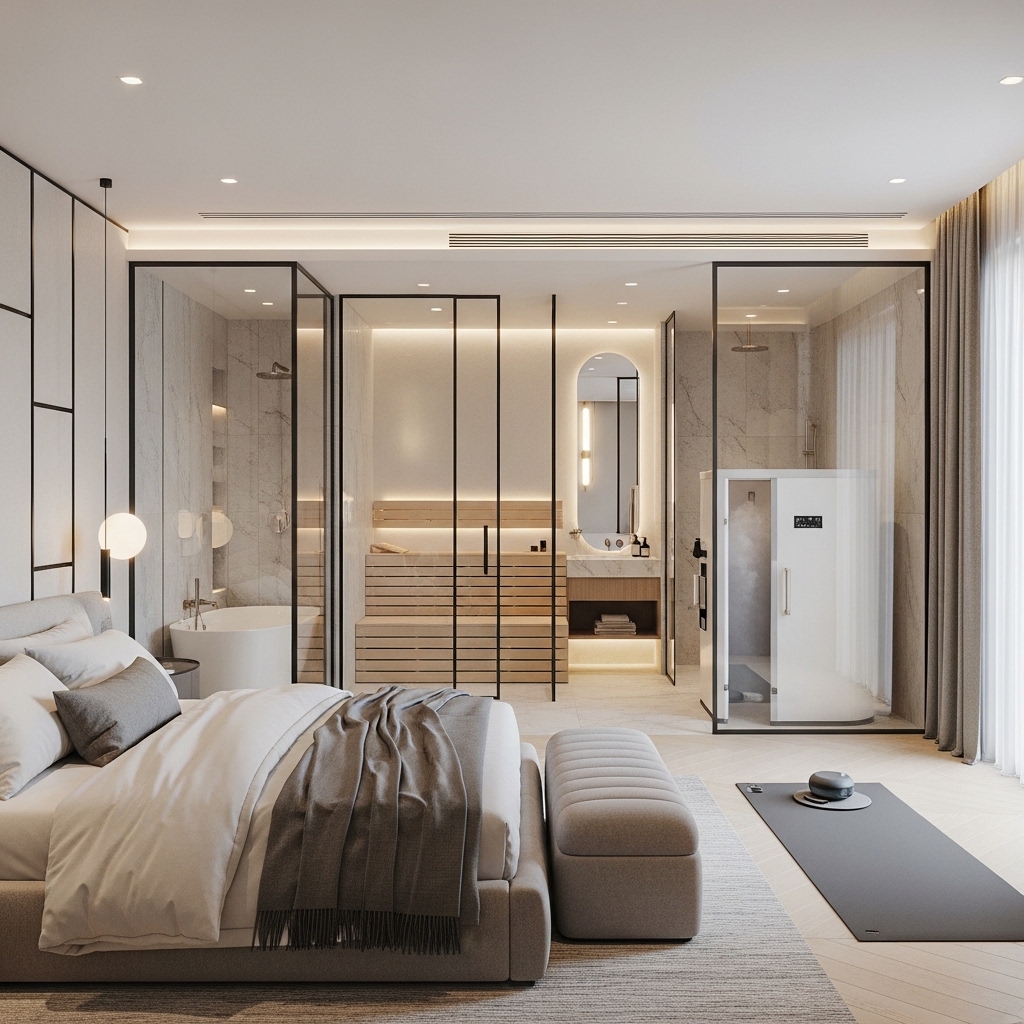
For today’s affluent client, the bedroom is the central hub of a wellness-focused lifestyle. This goes far beyond simply placing a yoga mat in the corner. It involves the integration of “whole-body wellness” into the very structure of the room .
- The Spa Continuity: The master suite is now treated as a fluid ecosystem. High-end designs are removing barriers between the bedroom, dressing area, and bathroom. Using consistent materials, frameless glass partitions, and open layouts creates a cohesive flow from sleeping to bathing .
- High-End Wellness Features: We are seeing a surge in demand for dedicated meditation nooks, integrated saunas, and even cryotherapy chambers adjacent to the bedroom. Designers are noting that younger clients are “fully invested in the function” of these spaces, not just having them to tick a box .
- Acoustic Serenity: “Silent architecture” is a growing priority. To ensure restorative sleep, luxury bedrooms are incorporating acoustic panels, plush textiles, and dense insulation to create a haven free from external noise pollution .
3. The Rise of Biophilic and Organic Design
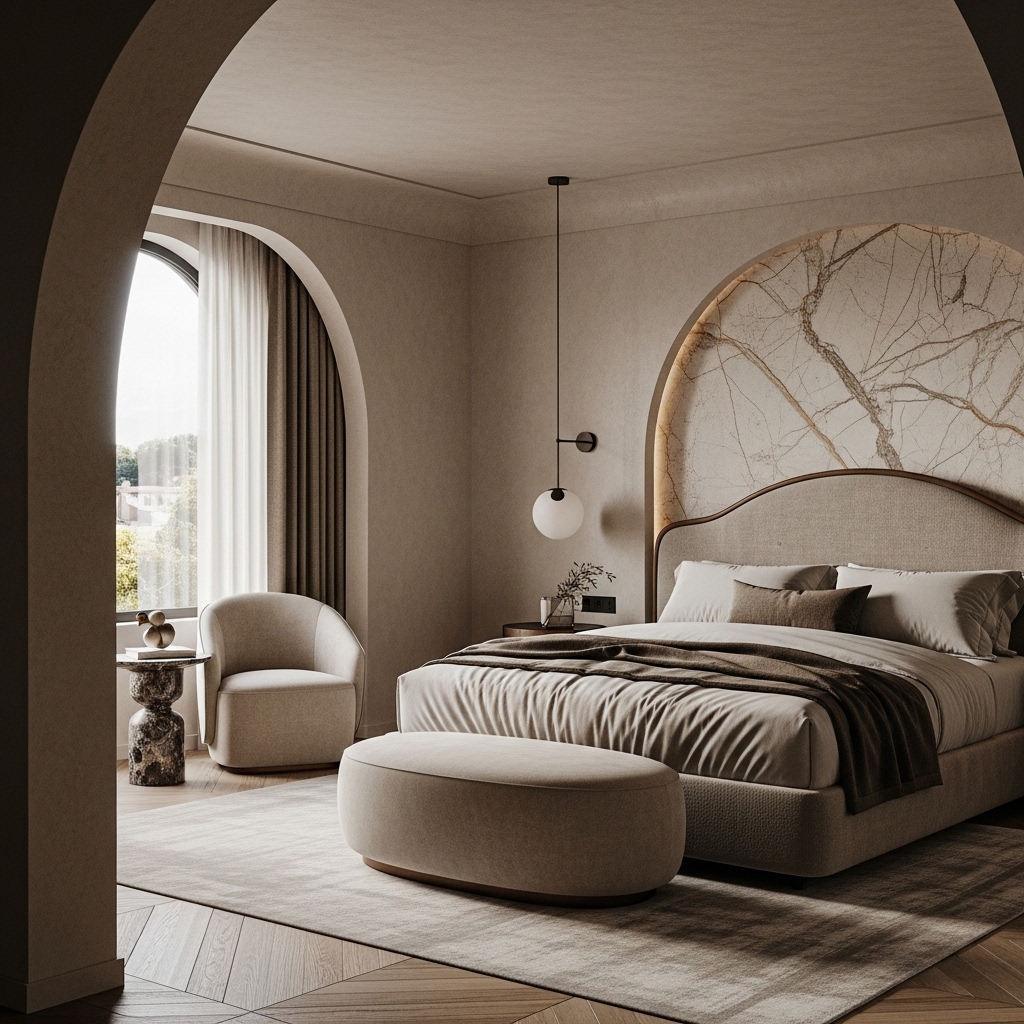
Connection to nature is no longer an afterthought; it is a foundational element of luxury. The 2026 bedroom brings the outdoors in through a lens of raw, organic authenticity. This manifests in several ways :
- Curves and Comfort: The era of sharp, rigid lines is softening. Curved architecture—such as arched doorways, rounded headboards, and oval ottomans—is being used to create a sense of comfort and flow. These shapes “hug” the space, creating a welcoming interior that feels less like a museum and more like a sanctuary .
- Sculptural Materials: “Material alchemy” is key. Designers are using expressive stone with bold veining, leathered granite, and back-lit onyx as art pieces. Timber is celebrated in its natural state—reclaimed planks or live-edge furniture—emphasizing sustainability and tactile warmth .
- Nature-Mimicking Texture: Wallpaper is moving beyond flat patterns to 3D textures that mimic natural elements like stone or wood grain. These textural walls not only add visual depth but can also serve functional purposes like sound dampening .
4. Immersive Color Drenching
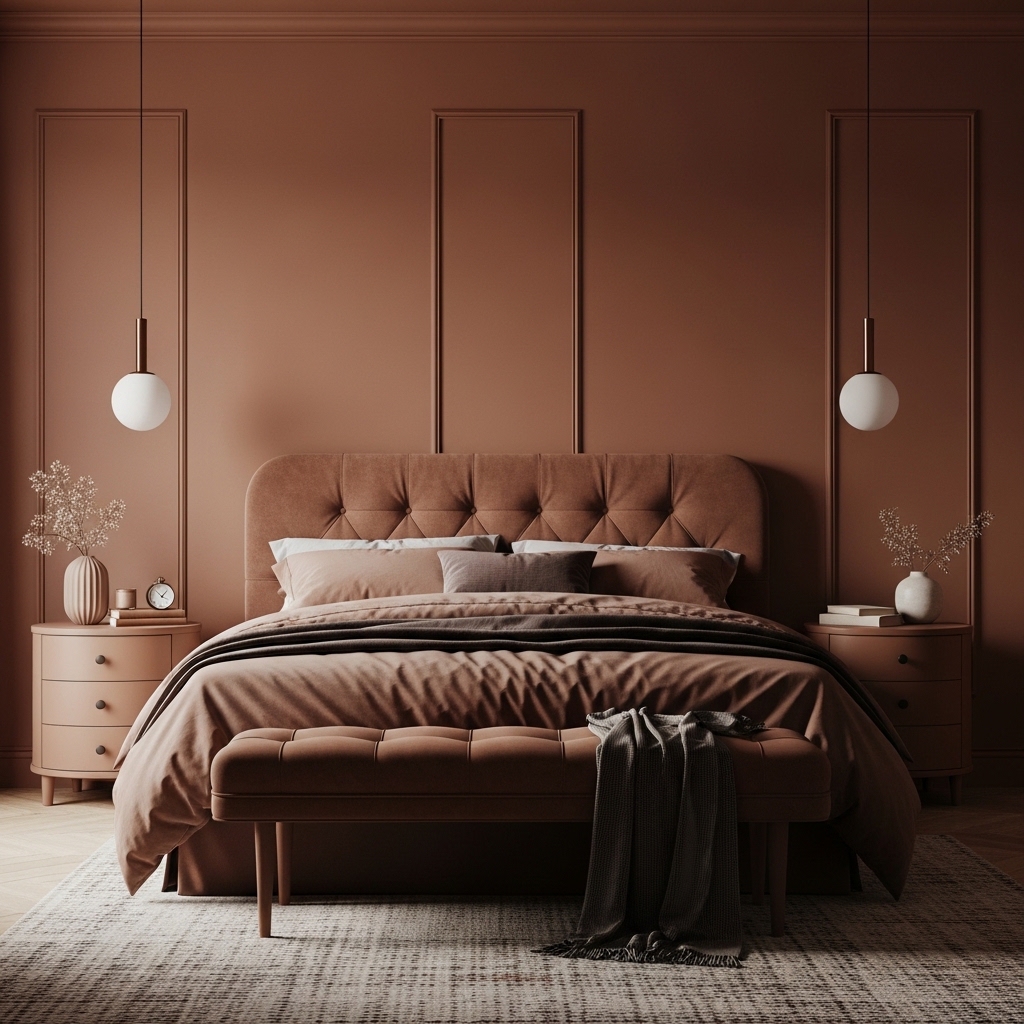
Neutral palettes are evolving from simple beige and grey to more complex, immersive earth tones. The trend for 2026 is “color drenching”—the practice of painting walls, ceilings, and woodwork in a single, cohesive shade to create an enveloping, cocoon-like effect .
- The Palette: Warm, grounded colors are taking precedence. Think terracotta, cocoa brown, dusty sage, and deep burgundy. These “muddied” shades offer a sophistication that cooler greys often lack, bringing a sense of warmth and intimacy to expansive master suites .
- Quiet Contrast: While color drenching creates a moody backdrop, luxury is added through layers of texture. A terracotta wall paired with a bouclé headboard and a hand-woven wool rug creates a rich, multi-sensory experience without relying on bright, jarring colors .
5. The “Resimercial” Entertainment Space
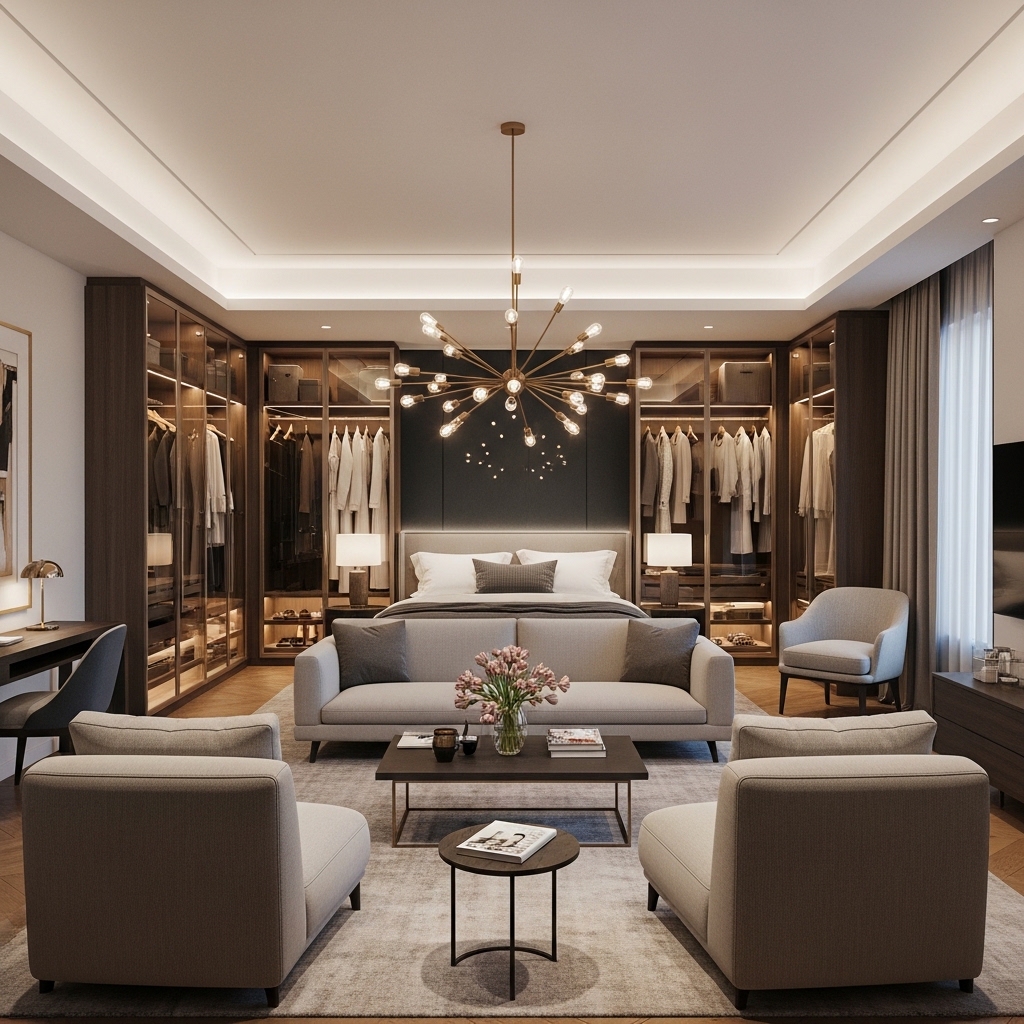
As the lines between work, life, and leisure blur, the luxury bedroom is adapting to host a wider range of activities. The trend is shifting away from formal, separate spaces (like a dedicated home office) toward flexible, multi-functional zones within the suite .
- Lounge Zones: It is now standard to include a seating area with a modular sofa or a pair of lounge chairs arranged around a coffee table. This creates a space for reading, morning coffee, or watching television in a more relaxed setting than the living room .
- Boutique-Style Closets: The walk-in closet is being elevated to a gallery-like space. With integrated lighting, seating, and glass displays, these closets function as luxurious dressing rooms where getting ready feels like an experience .
6. Sustainable and Artisanal Craftsmanship
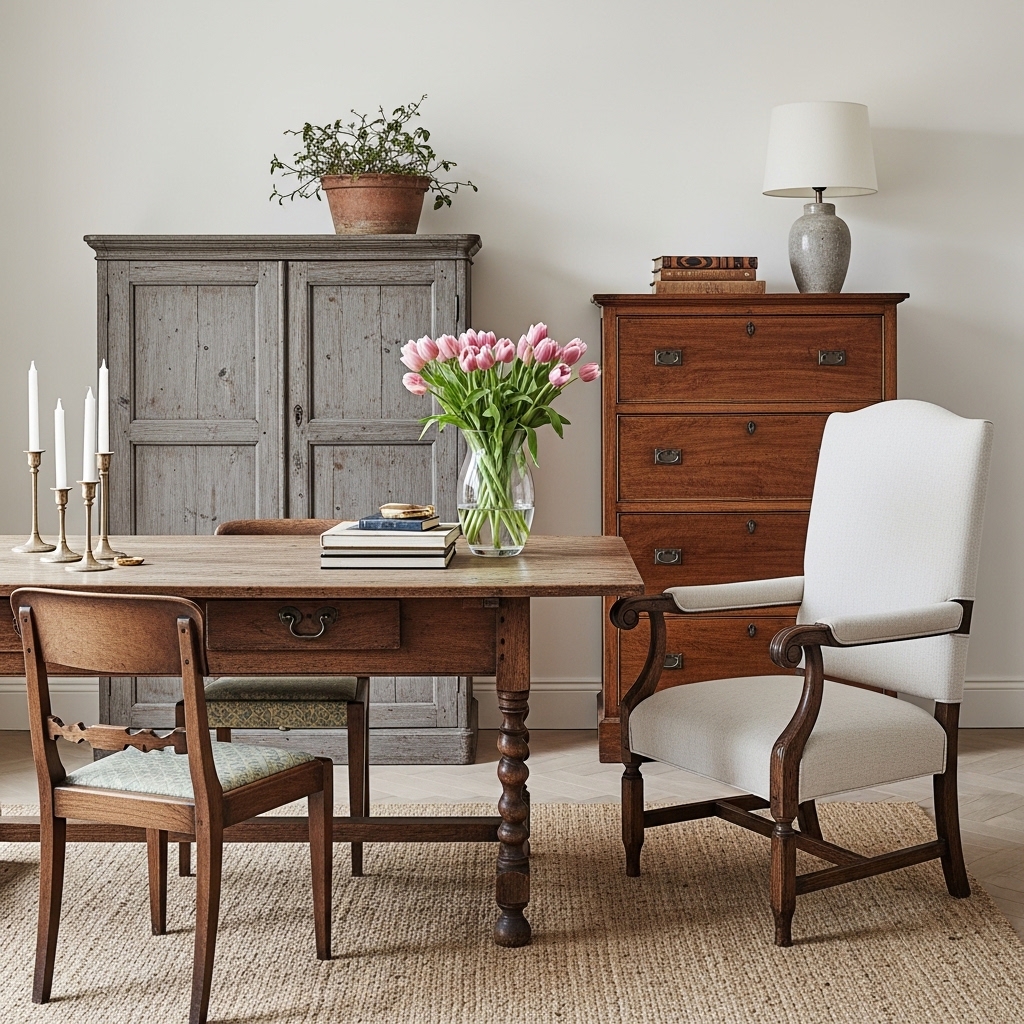
Sustainability is no longer a niche concern; it is a baseline expectation for luxury clients. However, it is being approached not just through eco-friendly materials but through the celebration of heritage and craftsmanship .
There is a growing appreciation for heirloom-quality furniture—pieces that are handcrafted, built to last, and often carry a story. This aligns with the desire for authenticity over mass production. Designers are sourcing antique pieces, working with local artisans, and using certified sustainable materials like FSC-certified timber and organic textiles to create spaces that are both beautiful and responsible .
