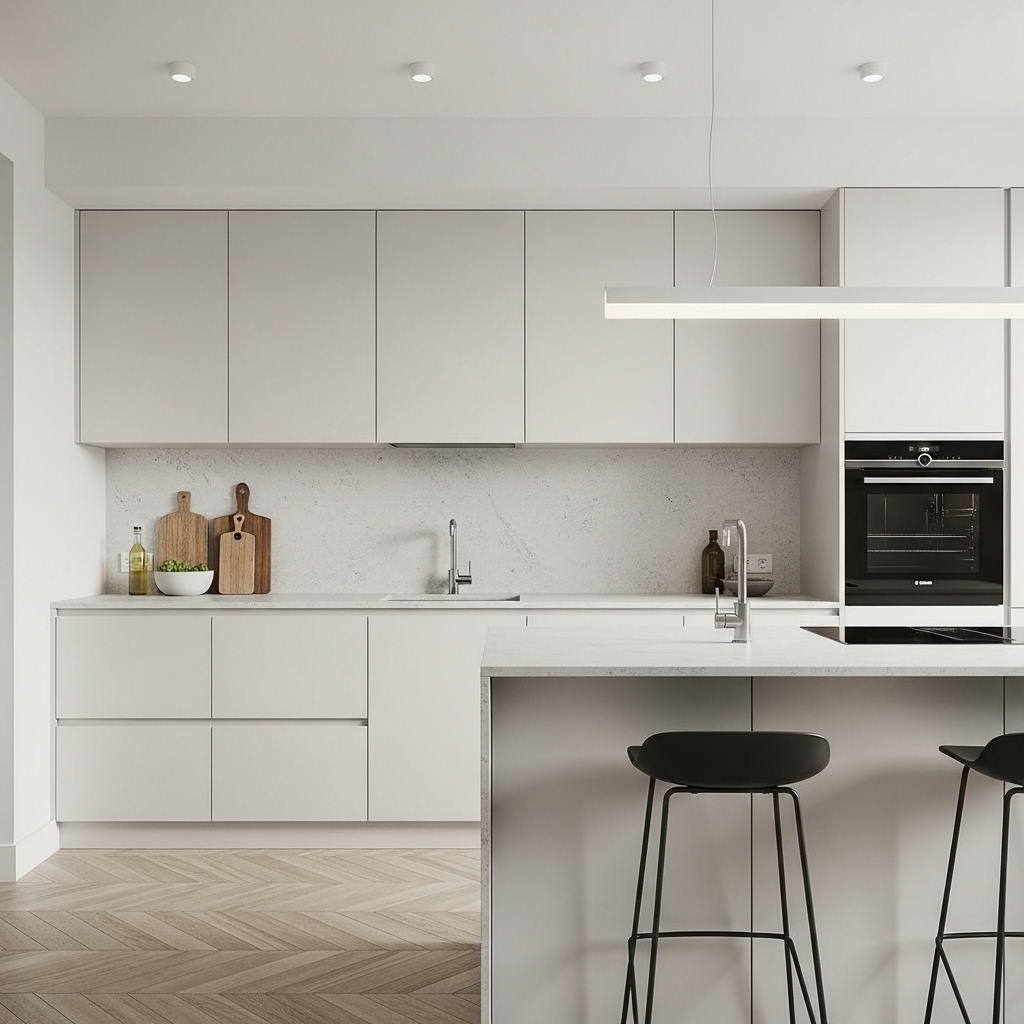
ArchDaily Readers, we have spent the last decade perfecting the art of subtraction. We mastered the handleless cabinet, banned the upper cupboard, and buried our appliances behind flush panels. Yet, as we look toward 2026, a shift is occurring. The rigid dogma of “white box” minimalism is evolving into something more nuanced, more personal, and ultimately, more livable.
The 2026 minimalist kitchen is no longer just about what you remove; it is about what you choose to keep in sharp focus. It is a shift from Aesthetic Minimalism to Functional Mindfulness.
For the architect, the designer, and the discerning homeowner, here is how the landscape of the minimalist kitchen is being redefined this year.
1. The “Anti-Showroom” Materiality
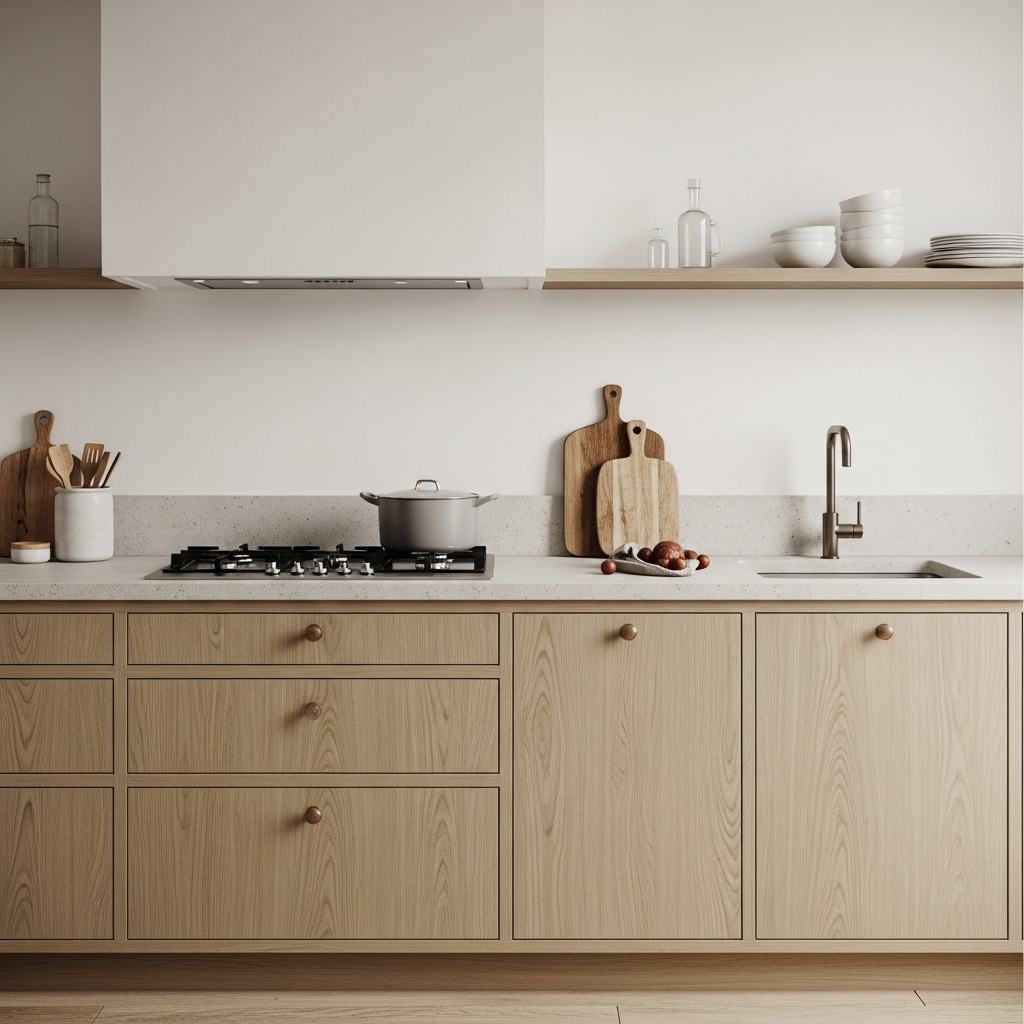
For years, the minimalist kitchen relied on the flawless perfection of high-gloss lacquer. In 2026, we are rejecting the sterile. The new palette is tactile and raw. We are seeing a surge in the use of lime-washed oak, textured microcement, and honed natural stones like travertine and soapstone.
The design intent here is to introduce wabi-sabi principles—the acceptance of imperfection. A kitchen should not look like a showroom that punishes a fingerprint; it should be a sanctuary that ages beautifully, where the patina of use adds to its value rather than detracts from it.
2. The Rise of the “Sacrificial” Island
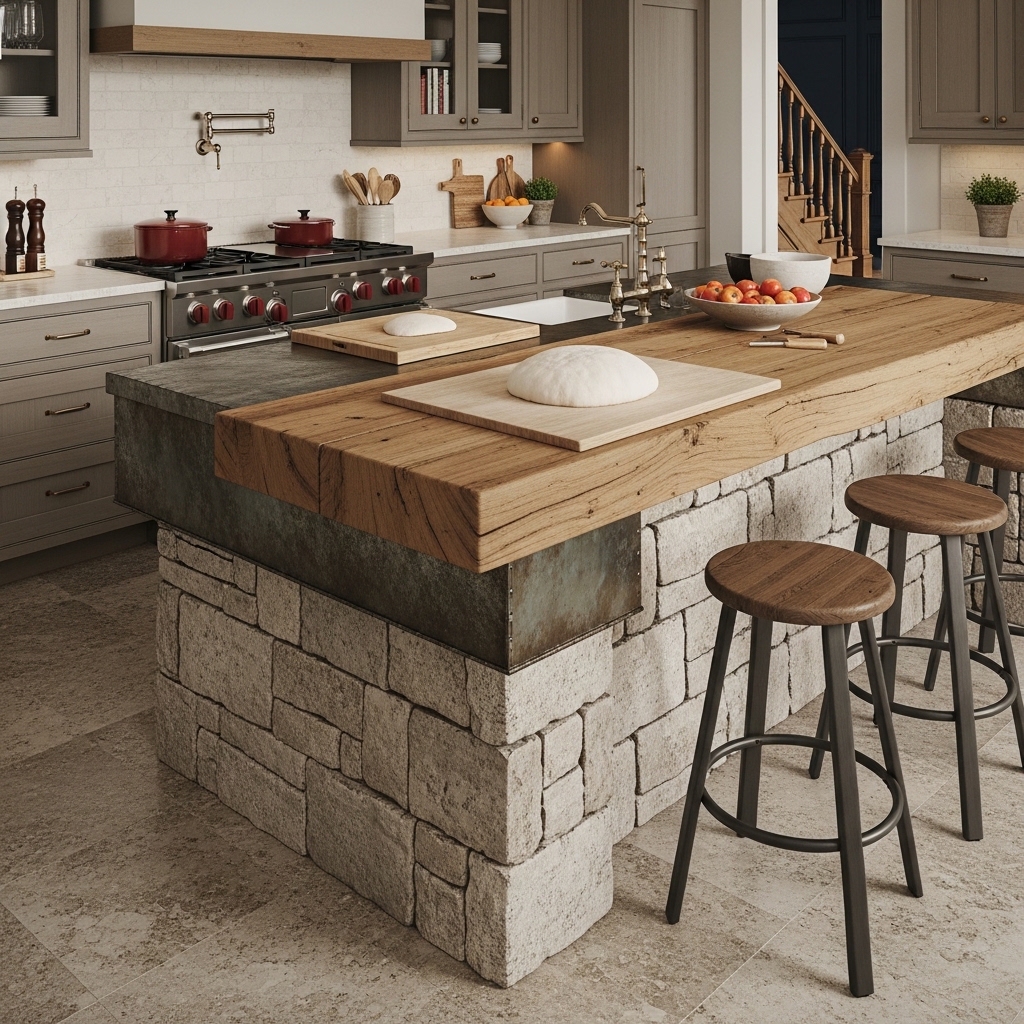
The kitchen island remains the hearth of the home, but its surface is undergoing a rebellion. The 2026 trend is the Sacrificial Island: a massive, monolithic block of wood or patinated zinc placed atop a stone base. This is a deliberate departure from the continuity obsession of the past.
Architecturally, this serves two purposes. First, it introduces a warm, tonal anchor in an otherwise monochromatic space. Second, it signals function. This is where you knead dough, set hot pans, and gather around stools. It is a utilitarian object proudly on display, softening the hard lines of the surrounding cabinetry.
3. Integrated Wellness Zones
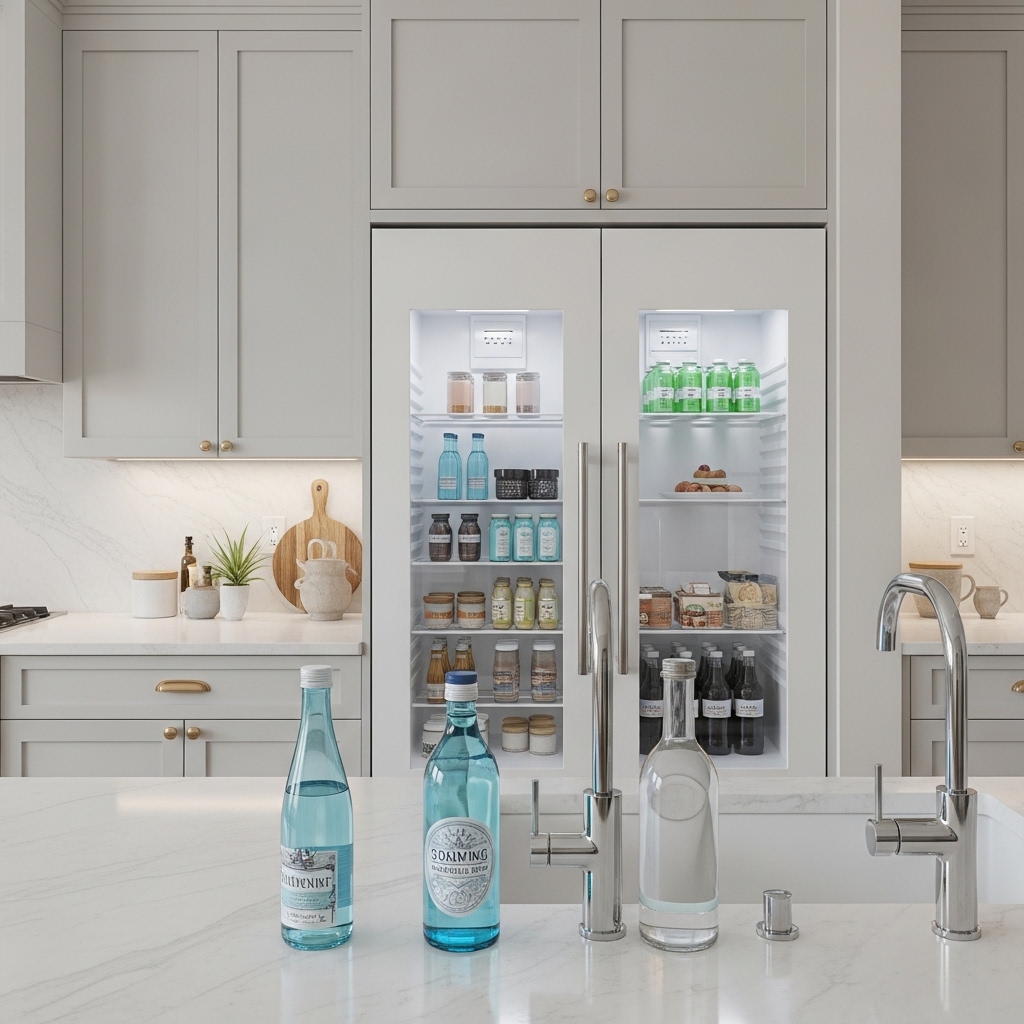
Minimalism is, at its core, about reducing cognitive load. In 2026, this philosophy extends to wellness. We are designing kitchens that function as holistic living spaces, not just cooking labs.
Expect to see the integration of hydration stations (dedicated filtered boiling, sparkling, and chilled water taps) and temperature-controlled pantries that allow for the removal of bulky refrigerators from the main sightline. The goal is to eliminate the visual clutter of countertop appliances. If it sits on the counter, it must be beautiful enough to be sculpture.
4. The Invisible Infrastructure
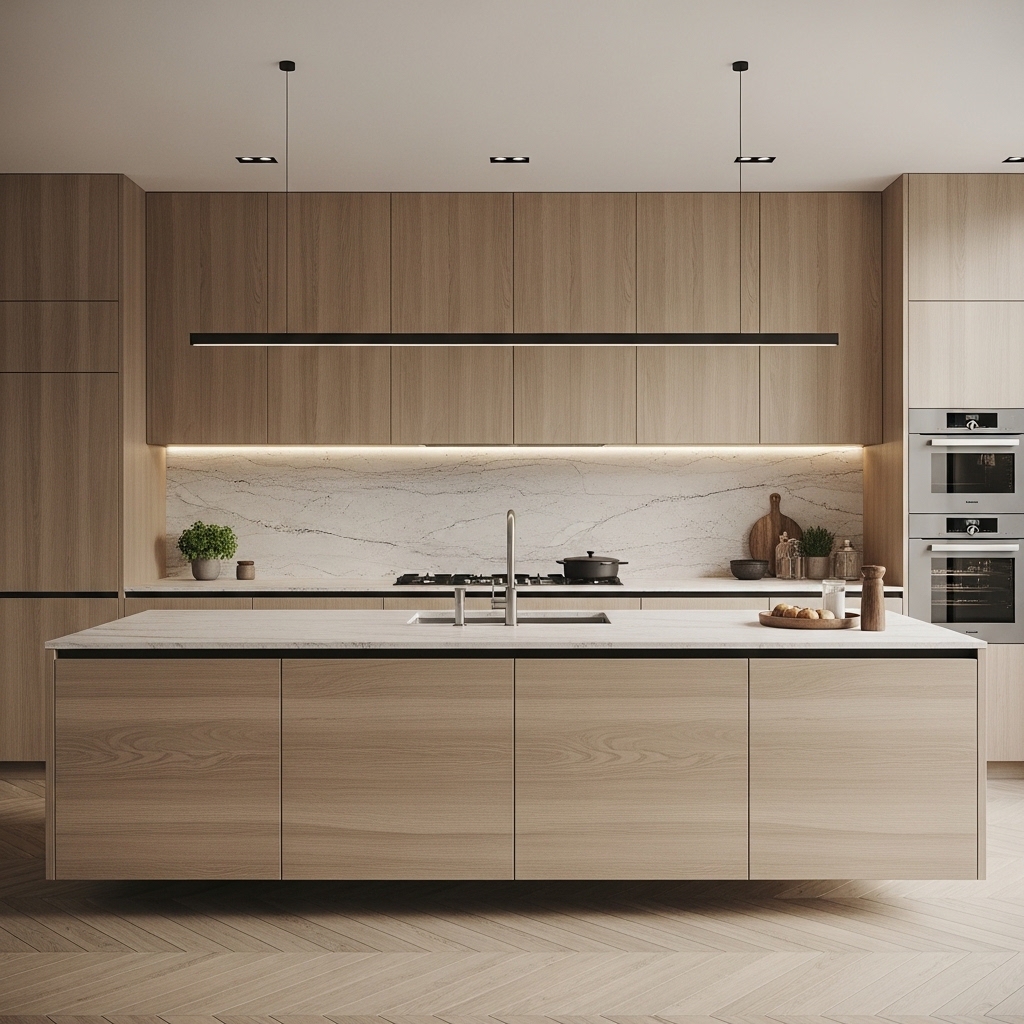
For our audience, the magic is in the details. The 2026 minimalist kitchen hides its complexity with surgical precision.
- Flush-to-Ceiling Stone Slabs: No more backsplash interruptions. Stone continues from countertop to ceiling, creating a monolithic enclosure.
- Recessed Kick-away Toe-kicks: The standard recessed plinth is being replaced by fully recessed, shadow-gap toe-kicks, making cabinetry appear to float.
- Structural Glass: Where walls are necessary, structural glass is being used to maintain visual flow while offering acoustic separation between the kitchen and living areas.
5. The Warm Industrial Contrast
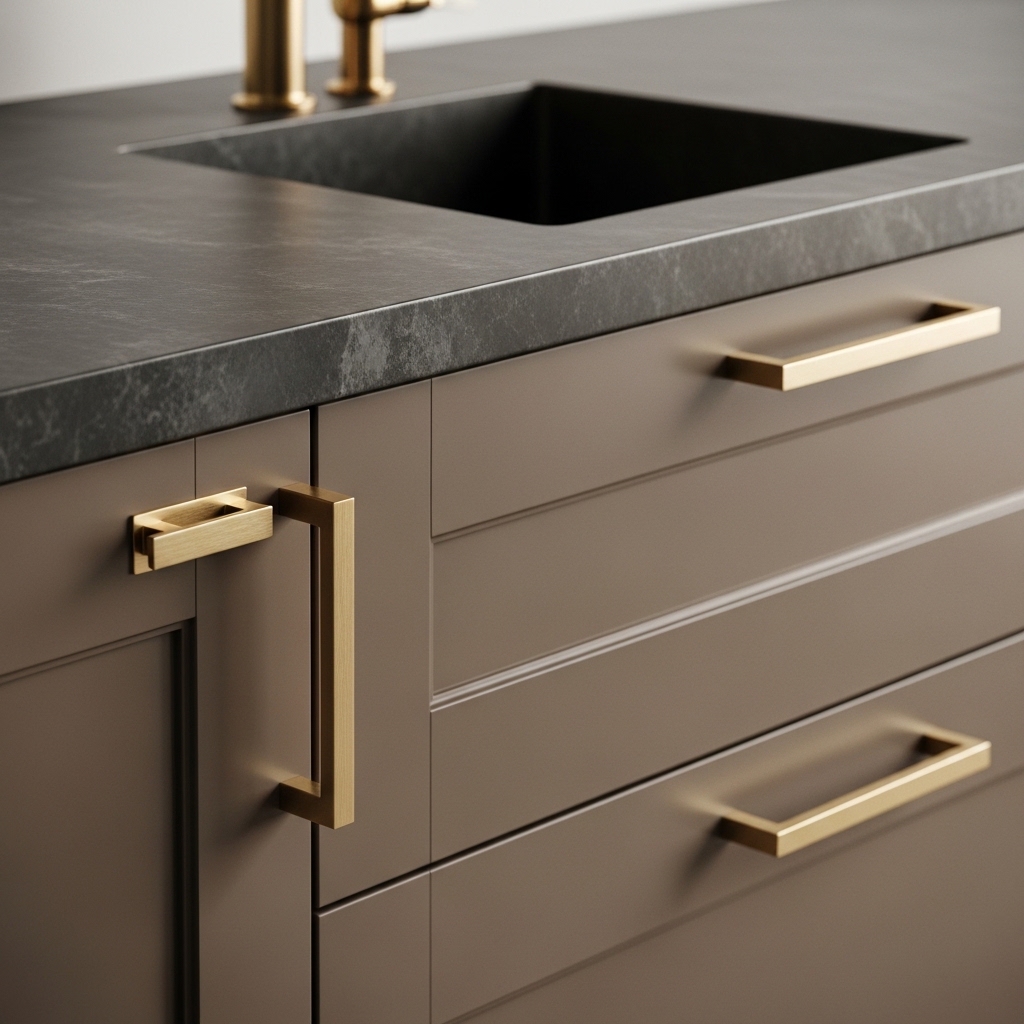
Stark minimalism is giving way to Warm Industrial. Think of the precision of a laboratory meeting the comfort of a library. We are specifying brushed brass, oil-rubbed bronze, or even oxidized steel for hardware and accents, set against matte, earthy cabinetry.
This contrast is crucial for wayfinding. In a truly minimalist space, users need visual cues. Hardware is no longer hidden; it is curated as jewelry for the architecture, providing the tactile invitation to interact with the space.
The Verdict for 2026
The minimalist kitchen is maturing. It is shedding the coldness of the 2010s and embracing a warmer, more textural future. As architects and designers, our challenge is no longer just to hide the clutter, but to create spaces that respond to the senses—spaces that are quiet without being empty, and functional without being cold.
It is minimalism for the way we actually live: intentionally, imperfectly, and beautifully.
